METHODS · 2026-09-24
Frozen vs Fresh Tteok: How to Store Rice Cakes So They Cook
By Tteok Curator
Fresh tteok is a same-day food. Refrigeration firms it. The freezer is the real second day — if you wrap it dry and soak it right.
TL;DR
Eat fresh tteok the day you buy it. Do not “keep it in the fridge for a week” and expect market texture. Freeze extras, well wrapped, and soak from frozen or barely thawed before soup or tteokbokki. Re-steam sweet cakes; simmer savory cylinders. Heritage dduk storage lives on dduk.ai; this page is everyday shop tteok.
Rice cakes stale faster than sandwich bread. The starch that made them stretchy recoils as they cool — retrogradation — and a fridge actually speeds that firming for many tteok. That is why a market bag left on a refrigerator shelf for five days cooks up chalky even if it never spoiled. Fresh versus frozen is not a lifestyle preference. It is a moisture-and-time problem.
Fresh, from a tteok shop steamer, is already hydrated and slightly tacky. It wants to be cooked the same day: sliced into tteokguk, pan-fried, or dropped into a sauce after a brief rinse. If you must hold it overnight, wrap it so it does not dry, and plan on a short soak or a gentle re-steam. Do not stack warm cakes in a sealed plastic bag; condensation makes the surface slimy and the next piece tears.
Refrigerated grocery cylinders are a different product. They were cooked, cooled, and packed to sit. They are drier and need 15–20 minutes in warm water before tteokbokki. If the pack is oil-coated, rinse after soaking so sauce can cling. The tteokbokki hub explains wheat-mix versus rice chew at https://tteokbokki.ai/blog/wheat-vs-rice-tteok-for-tteokbokki/ — read that before you blame your freezer for a brand that was always chewy.
Freezing is the correct longer hold. Cool leftover fresh tteok completely, then wrap pieces or short logs so they do not share one icy clump. Press air out of the bag. Label the date. A few weeks is reasonable; months pick up freezer smell. Do not freeze a finished, sauced pot of tteokbokki and expect the same chew — freeze the cakes plain and the sauce in a jar, the way https://tteokbokki.ai/blog/make-ahead-freezer-tteokbokki-meal-prep/ describes.
Cooking from frozen. For tteokguk ovals, you can often go from frozen into a simmering broth with a couple of extra minutes, stirring less so edges do not shred. For tteokbokki cylinders, thaw just enough to separate, then soak until they bend before they meet a gochujang pot. A hard boil from rock-frozen king cakes sloughs the outside. Patience is cheaper than a new bag.
Sweet cakes are a third rule set. Injeolmi, songpyeon, and siru layers hate the refrigerator uncovered and love a re-steam after a freeze. That method — cloth on the lid, no microwave-only if you can help it — is written on the heritage site: https://dduk.ai/blog/storage-freezing-and-re-steaming-dduk/. Do not use tteokbokki soak logic on a pine-scented songpyeon. You will wash the holiday off.
Signs a bag is done, not tired. Sour or fermented smell on plain garae means it sat warm too long. Visible dry cracks mean you should soak longer or use the pieces in a stew where they will break anyway. Pink or fuzzy growth is not “extra fermentation.” Compost that. White dust on frozen cakes is often just frost; it cooks off.
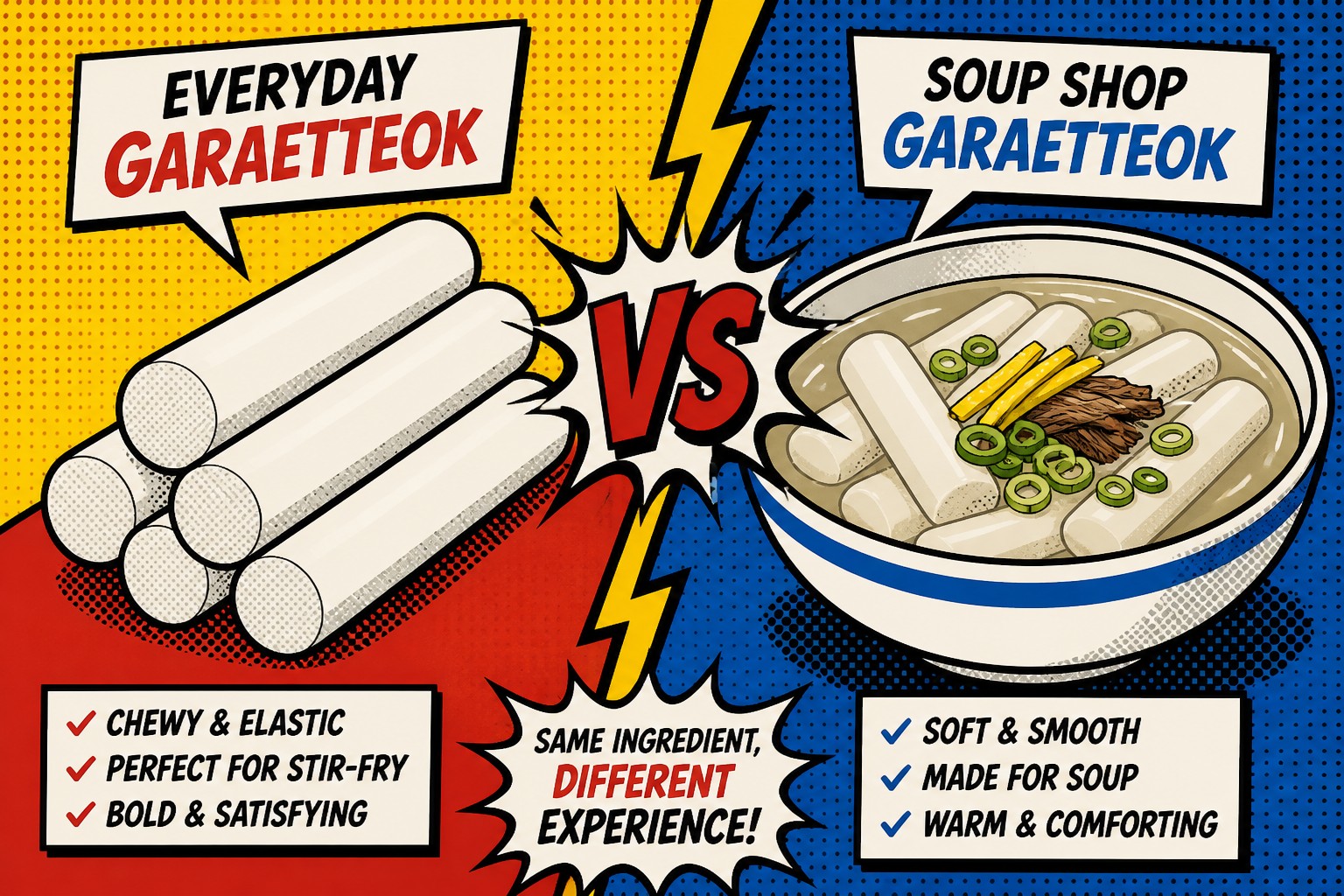
Shop habits that save you. Buy fresh for the meal you will cook tonight. Buy frozen or vacuum-packed for the emergency weeknight. Do not buy a holiday tower of sweet dduk on Monday for a party on Saturday unless you have a freezer plan. The everyday shop glossary is /blog/everyday-tteok-garae-vs-garaetteok-soup-shop/. Soup technique: /blog/savory-dduk-garae-tteok-tteokguk-techniques/ is on dduk.ai; our own tteokguk notes stay in the everyday post and recipes on this site.
If your search was really “why is my tteokbokki chalky,” the answer is usually under-soaking or a frozen cake thrown into a fierce boil — not a secret sauce ratio. Fix hydration first, then go to https://tteokbokki.ai/blog/tteokbokki-sauce-gochujang-balance/. If your search was “songpyeon vs mochi,” that comparison is https://dduk.ai/blog/songpyeon-vs-mochi/, not a storage chart.
A simple home system. One bag in the freezer, labeled. One small pack in the fridge that you will finish in three days. No open bowl of leftover cylinders drying on a plate. Soak water is not reusable stock; it is cloudy starch. Drain it. Pat if the recipe is a dry pan-fry; leave them wet-ish if they are going into sauce.
We are not going to quote a lab moisture percentage we did not measure. Your kitchen humidity and the mill that ground the rice change the exact minute count. Use the bend test: a cylinder that can curve without cracking is ready to cook. One that snaps is not.
When the cakes are right, cook them on the site that owns the dish. Tteokbokki and rabokki: https://tteokbokki.ai/. Ritual and pastel towers: https://dduk.ai/. Everyday soup and shop cakes: this site. Storage is the unglamorous page that makes the other two taste like themselves.
Fridge versus freezer is the decision people get backwards. The refrigerator is a short hold that firms starch. The freezer is a pause that, if the wrap is tight, gives you a usable cake weeks later. A week in the fridge is usually worse than a week in the freezer. If you bought fresh tteok and dinner slipped by a day, freeze tonight rather than “keep it cold until the weekend.” Weekend you will still have to soak. The freezer at least stops the drying.
Thawing without a puddle. Leave the bag in the fridge for a few hours if the pieces are stuck, or run the sealed bag under cool water just until you can break them apart. Do not microwave a clump of garae on high; the edges cook and the center stays icy. Once separated, soak as if they were refrigerated cakes, then cook. If a piece cracked in the freeze, it will still work in soup. Save the prettiest cylinders for a tteokbokki pot you care about.
Pan-fry is a third cooking path with its own moisture rule. Leftover tteokguk slices or cylinders can go into a lightly oiled skillet until the surfaces blister. They need to be dry-ish on the outside or they steam instead of brown. Pat them. Do not start from rock frozen in a dry pan — they scorch before they soften. A short soak or a thaw, a pat, then the pan. Serve with a dip of soy and sesame, or fold into a leftover japchae skillet if you already have noodles on https://japchae.ai/.
More Korean food
Relevant pages on the two hub sites — recipes and a BBQ directory on bulgogi.ai, street rice cakes on tteokbokki.ai.
- bulgogi.ai — recipes & BBQ directory →Marinades, cuts, and a USA Korean BBQ map.
- tteokbokki.ai — street rice cakes →School-cart sauce, rose, mala, and tteok types.
- Wheat vs rice tteok for braising →Street tteokbokki chew lives on the hub, not this everyday-tteok journal.