CULTURE · 2026-08-16
Tteok vs. Mochi at the Cafe: What You're Actually Eating
By Tteok Curator
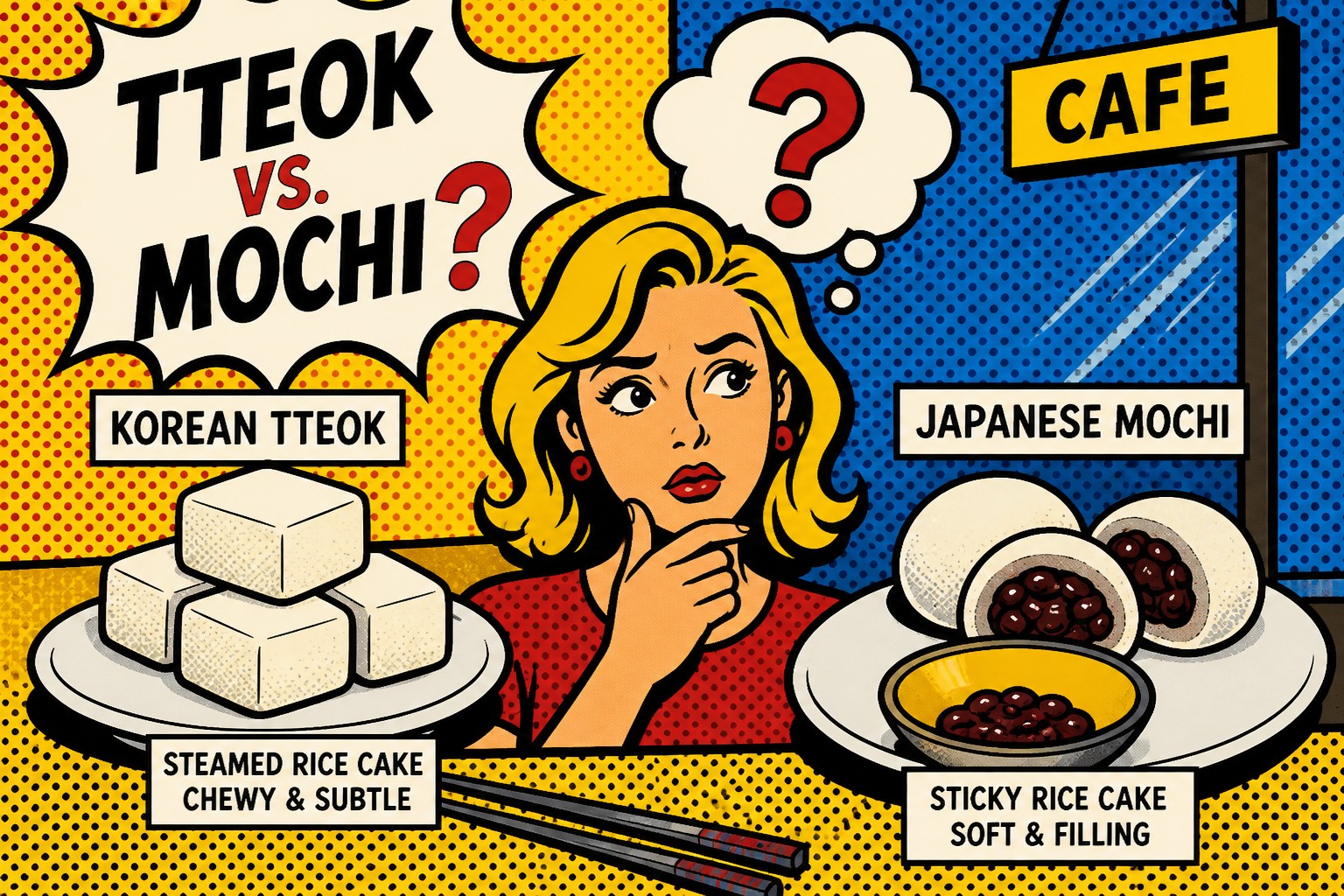
Menus swap tteok and mochi freely — taste blind, you can tell by stretch, filling, and powder.
TL;DR
Menus swap tteok and mochi freely — taste blind, you can tell by stretch, filling, and powder.
Pull test: mochi stretches longer and thinner before breaking because its higher-moisture pound is worked hotter and faster; tteok stretches shorter and snaps with a slightly grainy edge due to drier steam and denser crumb. Both chewy, different break.
Powder test: kong-garu (roasted soybean) smells nutty and coats drier than kinako-plus-sugar; kinako for mochi is often sweetened lightly. If the powder tastes sweet on its own, you are likely eating Japanese-style coating.
Filling placement: mochi centers its filling (anko or ice cream) fully wrapped; tteok either has filling threaded as a layer (yaksik) or half-moon pocket (songpyeon) or no filling with powder on external. Center-filled tteok exists (ggyeongdan) but smaller and bean-forward.
At cafes, ask. If a 'mochi' is filled with sweet bean and dusted with kong-garu, it is probably tteok technique sold under mochi name because mochi searches sell more; no malice, just SEO. Order by texture you want, not word.
We cross-link tteok.ai and dduk.ai with this glossary so both heritage and cafe shoppers land correctly regardless of search term — accuracy without pedantry builds trust.
More Korean food
Relevant pages on the two hub sites — recipes and a BBQ directory on bulgogi.ai, street rice cakes on tteokbokki.ai.
- bulgogi.ai — recipes & BBQ directory →Marinades, cuts, and a USA Korean BBQ map.
- tteokbokki.ai — street rice cakes →School-cart sauce, rose, mala, and tteok types.
- Wheat vs rice tteok for braising →Street tteokbokki chew lives on the hub, not this everyday-tteok journal.