RECIPES · 2026-10-05
How to Make Tteokguk — Korean Rice Cake Soup for Seollal (or Tuesday)
By Tteok Curator
Clear broth, soaked oval rice-cake coins, egg garnish. The New Year soup that also works as a weeknight bowl — without turning the cakes to paste.
TL;DR
Soak oval tteokguk-tteok until they bend. Simmer a clean beef or anchovy-kelp broth. Add the cakes only for the last 4–6 minutes, until they float and puff. Garnish with jidan, gim, and scallion. The short card is /recipes/tteokguk-seollal-soup/. Spicy red pots are https://tteokbokki.ai/blog/how-to-make-tteokbokki/.
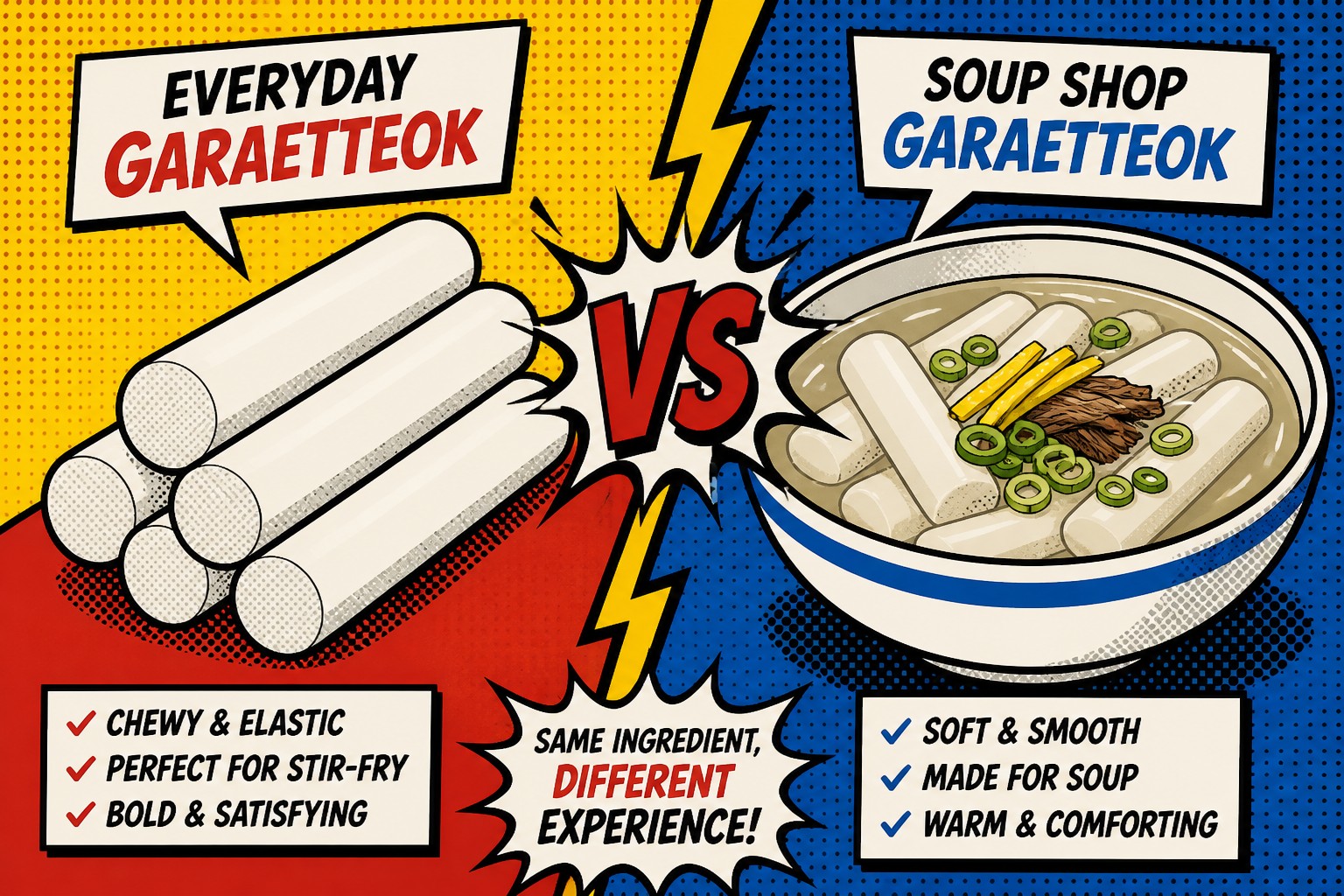
Tteokguk is sliced rice-cake soup. The cakes are thin ovals cut from a garae log, not the thick cylinders you braise in gochujang. The broth should stay clear enough to see the coins. The garnish is yellow-and-white egg strips (jidan), toasted gim, and scallion. People search “tteokguk recipe” in January because Seollal tables serve it, and they search it in July because a grocery bag of sliced tteok is sitting in the fridge. This page is the method. The short card is /recipes/tteokguk-seollal-soup/.
Buy tteokguk-tteok or “soup rice cake slices,” not tteokbokki sticks and not dessert mochi. Fresh shop slices are already hydrated and want a short rinse. Refrigerated vacuum packs need 15–20 minutes in cool water until a slice bends without cracking. Frozen slices can go into simmering broth if you stir gently and add two extra minutes; a hard rolling boil shreds the edges. Storage physics live on /blog/frozen-vs-fresh-tteok-storage/.
Broth is the soup. A common home pot is brisket simmered in water with onion, garlic, and a splash of soup soy until the meat is sliceable — about 45–60 minutes if the piece is not huge. Skim once. Another honest pot is dried anchovy and kelp (guts pulled from large anchovies) simmered 15 minutes, kelp pulled at 8 so it does not slime. You need about 6 cups of seasoned broth for 400 g of slices and four bowls. Do not use tteokbokki sauce. Do not use leftover jjigae.
Season the broth before the cakes go in. Soup soy (guk-ganjang) keeps the color pale; regular soy works if you are careful with the amount. A pinch of salt and pepper. Taste. The cakes will dilute the pot slightly as they release starch. If you wait to season until the cakes are in, you will chase a moving target and oversalt.
Add drained slices to a gentle simmer, not a volcano. Four to six minutes is the usual window for soaked refrigerated coins. They are done when they float, look slightly translucent at the edge, and a bite is tender without a chalk core. Pull the pot off the heat while they still have a little chew. Carryover and the hot bowl keep cooking them. A hard boil turns the broth cloudy and the coins ragged.
Jidan is two thin omelets — yolks and whites cooked separately in a barely oiled pan, then julienned. You can skip the white sheet and only do yolk if you are tired. Gim torn over the bowl is not optional for the classic look; it is the marine note that makes a beef broth taste like tteokguk instead of “meat soup with pasta.” Scallion last. A few drops of sesame oil in the bowl, not the stockpot, if you want aroma without a slick.
Beef in the bowl is sliced brisket from the simmer, or leftover roast cut thin. A weekday pot can be broth-only with an egg dropped in at the end. That is still tteokguk. It is not a failure of the holiday. Mandu-guk is a fork: add dumplings and you have a different soup that Koreans also eat at New Year. Keep the dumplings on the side of this page unless you already know your dumpling brand’s cook time.
What this soup is not. It is not tteokbokki. It is not dduk for a wedding tower. If you landed here wanting a red street pot, go to https://tteokbokki.ai/blog/how-to-make-tteokbokki/. If you landed here wanting songpyeon versus mochi, that comparison is https://dduk.ai/blog/songpyeon-vs-mochi/. This site owns everyday shop cakes and the soup they become.
Common failures. Cakes that stay hard: they were not soaked, or they were fridge-stale and needed the freezer-and-soak path on /blog/frozen-vs-fresh-tteok-storage/. Cakes that dissolve: they boiled too hard or sat in the pot after dinner. Broth that tastes like nothing: you used tap water and a bouillon cube and hoped the cakes would season it. Broth that tastes like stew: you used leftover galbi liquid. Cloudy pot: starch from unsoaked cakes or a violent boil.
Make-ahead. Broth freezes. Cakes do not want to live in leftover soup overnight — they swell and turn the fridge container into a gel. Store broth and unused soaked cakes separately. Reheat broth, add a fresh handful of slices, garnish again. That is how a Seollal leftover becomes Tuesday lunch without tasting like wallpaper paste.
Vegetarian table. Use the kelp-anchovy method without anchovies: kelp, dried shiitake, a piece of radish if you have it. Season with soup soy. The garnish stays. The ritual meaning of “one more year” does not require beef. It requires a bowl you will actually eat.
Pantry without a fake ranking. Oval soup cakes, soup soy, dried anchovies or a clean beef bone, eggs, gim. Amazon search links on the recipe card stay untagged until the network Associates tag is set. The buying decision between soup slices and tteokbokki cylinders is /blog/how-to-buy-garaetteok/.
If the cakes you bought are thick cylinders, do not slice them at home into ragged ovals unless you like uneven cook times. Use them for a soy braise or send them to the street-sauce hub. If the cakes you bought are sweet injeolmi or songpyeon, do not put them in this broth. That is a different job on this site and on dduk.ai.
Serve immediately. Tteokguk waits worse than almost any Korean soup because the starch keeps moving. Set the garnishes out. Bowl the cakes and broth. Eat. The second bowl from a held pot will be thicker than the first. That is starch, not a bad brand. A side of kimchi or kkakdugi (https://kimchee.ai/recipes/kkakdugi-cubed-radish-kimchi/) is the usual contrast. Japchae on a holiday table sits next to this soup, not in it: https://japchae.ai/blog/how-to-make-japchae/.
More Korean food
Relevant pages on the two hub sites — recipes and a BBQ directory on bulgogi.ai, street rice cakes on tteokbokki.ai.
- bulgogi.ai — recipes & BBQ directory →Marinades, cuts, and a USA Korean BBQ map.
- tteokbokki.ai — street rice cakes →School-cart sauce, rose, mala, and tteok types.
- Wheat vs rice tteok for braising →Street tteokbokki chew lives on the hub, not this everyday-tteok journal.